Community Post #5 – Formal Feedback
Ever since I started using LinkedIn I have always appreciated the recommendation and the ‘People you may know’ features because they make it easier to find and connect with people in computer science, cybersecurity, and tech. After this week’s readings and our learning pod discussion, I started thinking more about how design choices like recommendations can actually influence who we connect with. This connects to Bucher and Helmond’s (2018) discussion of how features on social media can enable or limit certain actions and interactions.
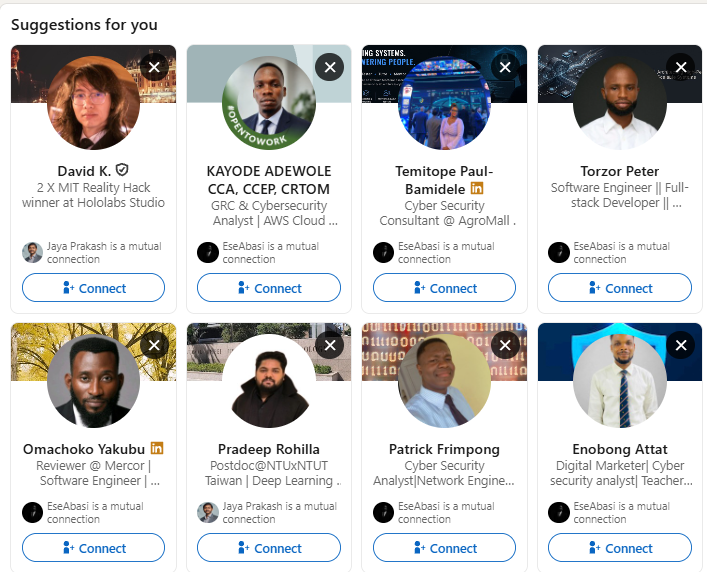
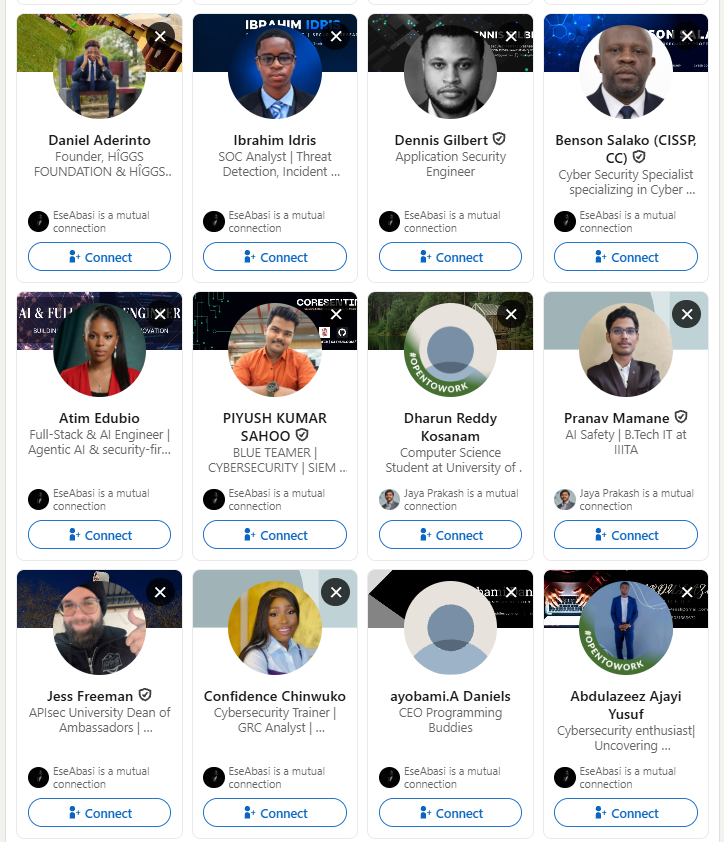
LinkedIn is probably the best example of this in my own PLN. The platform recommends people, posts, jobs, and companies based on my profile and activity. The one drawback of these features is that around 90% of my professional network is already in those areas, so the recommendations I get will almost always show me similar people and content. This is useful, but it can also make it harder to branch outside of the same communities without making an effort myself.
This also connects to something I discussed in one of my previous posts about diversity in PLNs. I think this is especially important in cybersecurity and tech as a whole because a good technical solution is not always enough. I am currently taking SENG 360 and we are learning that even if a technology works perfectly from a technical standpoint, it can still fail if it does not meet the needs of the people actually using it. I could make my PLN more diverse by following people in fields like business, sociology, law, UX, and education. One challenge is that it is easy to stay in your comfort zone around people who are in the same field as you, but making the effort to branch out to people and communities in other fields can give you new perspectives and help you look at problems differently.
Risko and Gilbert (2016) discuss cognitive offloading, which is when we use a tool to reduce some of the thinking we have to do ourselves. I think recommendations can become a form of this because instead of searching for who or what I should follow, I can simply use what LinkedIn recommends to me. This saves time and can help me find opportunities, but I may also be giving the platform some control over what gets my attention and what stays out of view.
Fadell (2015) also talks about how we get used to technology and stop noticing a technology’s design choices. This can also apply to recommendations because I don’t usually stop and think about why LinkedIn is showing me this specific user or post. Overall, recommendations can make building a PLN much easier without effort or intention, but they can also shape the network we end up building without us even noticing.
How much control do we really have over our PLN if platforms are deciding who to recommend to us?
Below are screenshots of LinkedIn’s “People you may know” feature that we discussed in our Learning Pod, showing how most of my recommendations are people in tech-related fields.
References:
Bucher, T., & Helmond, A. (2018). The affordances of social media platforms. In J. Burgess, A. Marwick, & T. Poell (Eds.), The SAGE Handbook of Social Media (pp. 233–253). SAGE Publications. Link
Fadell, T. (2015, March). The first secret of design is… noticing [Video]. TED Conferences.
Risko, E. F., & Gilbert, S. J. (2016). Cognitive offloading. Trends in Cognitive Sciences, 20(9), 676–688.